
Feed Your Lawn. Keep It Green All Season Long.
Lawn Fertilization Service in Warsaw, Indiana
Why Your Warsaw Lawn Needs More Than a Bag From the Hardware Store
Your neighbor's lawn is thick, deep green, and weed-resistant by mid-May. Yours thins out by July, browns in August, and never quite fills back in. The difference usually isn't the grass — it's what's feeding it.
Warsaw lawns face a specific challenge most generic fertilization programs ignore: heavy clay soil that locks up nutrients, freeze-thaw cycles that stress cool-season grass roots, and a short growing window that demands precise timing. A bag of big-box-store fertilizer applied at the wrong time does almost nothing — and sometimes does more harm than good.
At Blades and Stripes Lawn Care, we build seasonal fertilization programs specifically for Kosciusko County lawns. Right product. Right timing. Right rate. Every application.
Why Warsaw Lawns Need a Local Fertilization Approach
Warsaw sits in USDA Zone 6a, where Kentucky bluegrass, perennial ryegrass, and tall fescue dominate — and where heavy clay soil underlain by glacial till makes nutrient delivery a real engineering problem.
Generic fertilization programs fail here for predictable reasons:
Clay soil compacts tightly, which means surface-applied granular fertilizer often runs off before it ever reaches the root zone. Freeze-thaw cycles in March and November shift the timing windows for early-spring and late-fall feedings by weeks compared to southern Indiana. And cool-season grasses in Northern Indiana need their heaviest feeding in fall — not spring — which is the opposite of what most homeowners assume.
We've built our fertilization service around these local realities, not around a national franchise's one-size-fits-all calendar.
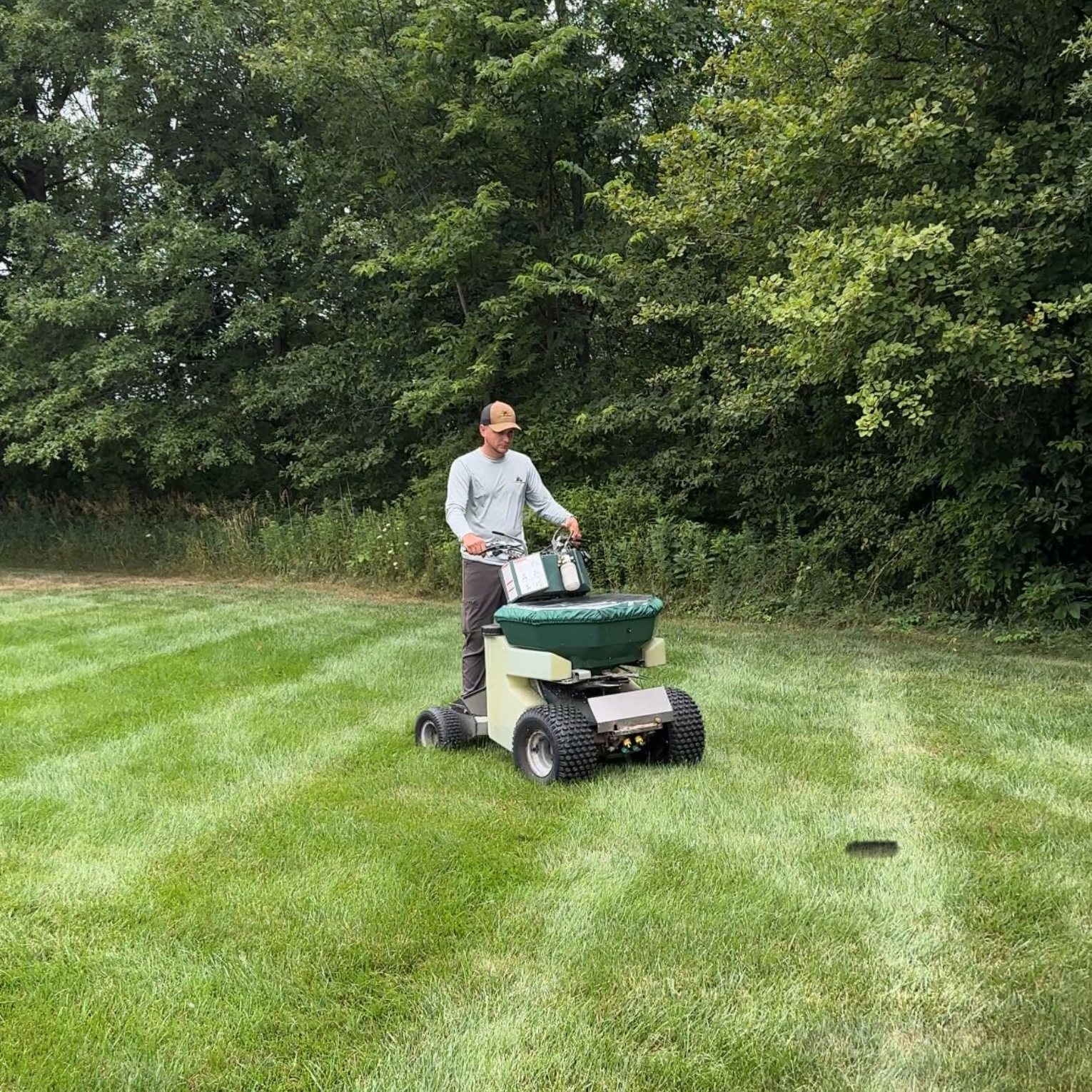
Our Seasonal Lawn Fertilization Program
Our program is structured around four to six applications timed to Warsaw's specific growing calendar. Each visit includes a lawn assessment, so we can adjust the next application based on what your turf actually needs — not what a corporate schedule says.
Spring Fertilizer with Pre-Emergent & Grub Control (March – April)
A balanced starter fertilizer wakes the lawn up after winter dormancy and supports root recovery from freeze-thaw stress. This application is paired with pre-emergent weed control to stop crabgrass before it germinates — typically when soil temperatures hit 55°F, which in Warsaw usually lands in early to mid-April. Grub control goes down with this step to disrupt Japanese beetles and masked chafers early, before they cause the late-summer damage that often shows up as brown patches in August and September.
Post-Emergent Broadleaf Weed Control (April – May)
Once cool-season broadleaf weeds — dandelions, clover, creeping Charlie, plantain, and violets — are actively growing, a targeted post-emergent application knocks them out without damaging the surrounding turf. Timing matters here: spraying when weeds are actively taking up nutrients delivers the cleanest results with the least amount of product on the lawn.
Summer Fertilizer (June – July)
A lighter, slow-release feeding designed to carry the lawn through Warsaw's humid, drought-prone summer weeks. Slow-release formulations are critical at this time of year — they feed steadily without forcing the kind of fast top-growth that exhausts roots or burns the turf in high heat.
Post-Emergent Broadleaf Weed Control (August – September)
A second post-emergent application catches the late-summer flush of broadleaf weeds before they go to seed and set up next year's problem. Cooler nights and softer humidity in late August and September also mean broadleaf weeds take up product more efficiently than they do in peak summer heat — making this one of the most effective weed-control windows of the year.
Fall/Winter Fertilizer (October – November)
The most important feeding of the year. Cool-season grasses in Northern Indiana do their deepest root development in fall, and a high-potassium winterizer hardens the lawn off for winter, improves freeze-thaw recovery, and builds the root mass that determines how the lawn looks the following spring. Skipping this application is the single most common reason Warsaw lawns look thin and tired in March.
What's Included in Every Fertilization Visit
Every application visit includes more than just spreading product. Our crew walks the lawn, checks for emerging issues, and documents what we see so the next visit is dialed in. A typical visit includes:
A pre-application lawn walk-through to check soil conditions, weed pressure, and turf density. Calibrated granular or liquid fertilizer application matched to your lawn's specific needs and the season. Spot treatment of broadleaf weeds (dandelions, clover, creeping Charlie, violets) when present. A post-application summary so you know exactly what was applied, when re-entry is safe for kids and pets, and what's coming next.
We don't use vague invoices. You'll always know what went down on your lawn and why.
Family and Pet Safety
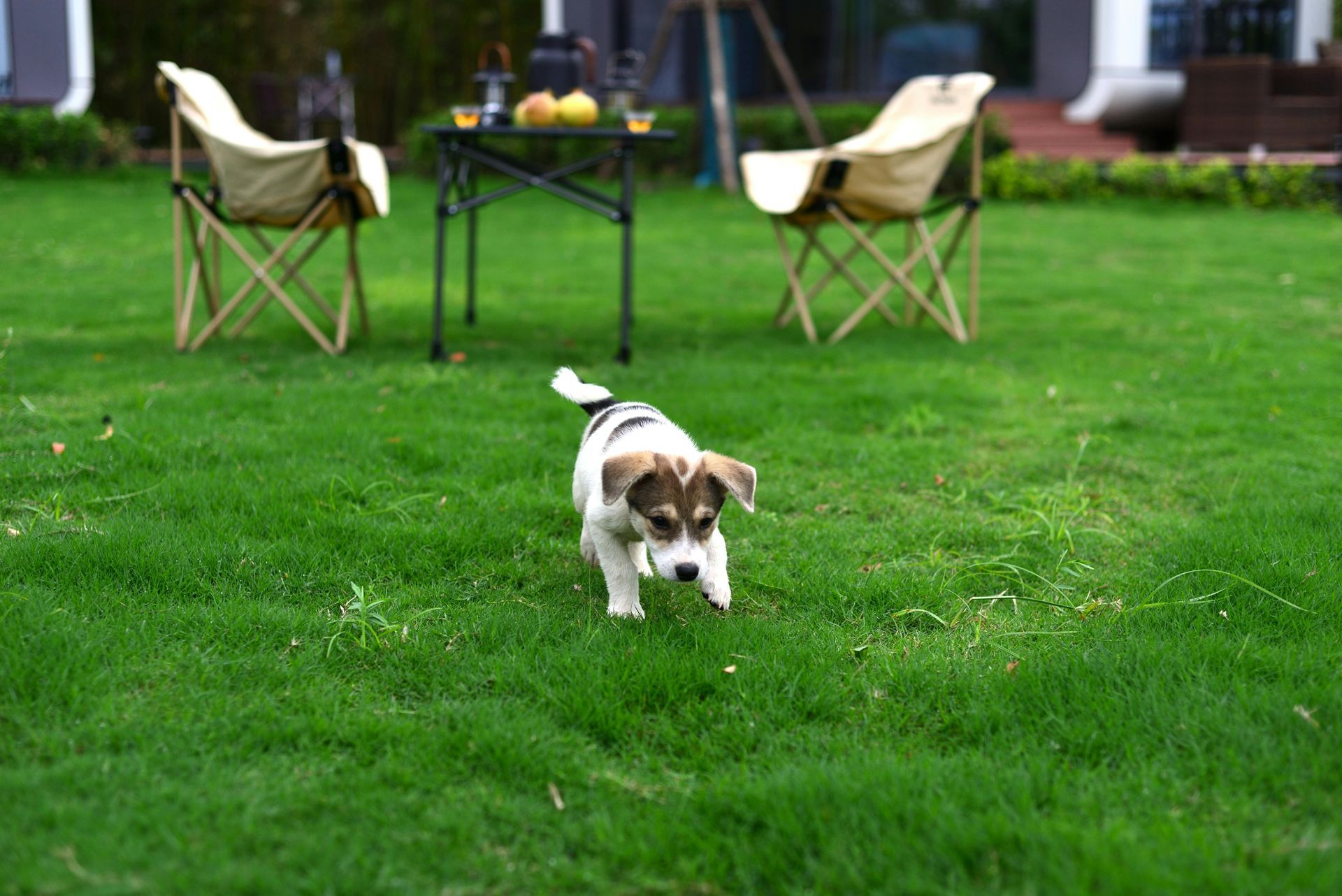
A lot of Warsaw families ask about pesticide and fertilizer exposure — especially homeowners with toddlers, dogs, or pollinator gardens. We use professional-grade products applied at labeled rates, follow re-entry timing precisely, and we'll tell you exactly when it's safe for kids and pets to be back on the lawn after each visit.
Fertilization Pairs Best With Our Other Lawn Care Services
Fertilization works hardest when it's part of a complete program. Our most successful Warsaw clients combine fertilization with:
Weekly Lawn Mowing
Consistent mowing at the proper height (3"–3.5" for Warsaw cool-season lawns) protects the roots fertilization is feeding and reduces weed pressure between applications.
Weed Control
Pre-emergent and post-emergent weed control programs paired with fertilization stop competitors from stealing the nutrients meant for your grass.
Lawn Aeration
Annual core aeration breaks up Warsaw's compacted clay soil so fertilizer actually reaches the root zone instead of running off the surface.
Lawn Overseeding For Patchy Lawns
Fertilizer feeds existing grass, but it can't grow grass where there is none. Overseeding fills bare patches and thickens thin areas, then fertilization carries those new seedlings through their first season.
Most homeowners see the biggest improvement when they stack aeration, overseeding, and fall fertilization in September — the single highest-impact window of the entire Warsaw lawn care year.
Service Areas
We provide professional lawn fertilization service across Kosciusko County, including:
Warsaw
Pierceton
Tippecanoe Lake
Winona Lake
North Webster
Webster Lake
Silver Lake
Syracuse
Center Lake
Leesburg
Lake Wawasee
Surrounding Kosciusko County Neighborhoods
Why Warsaw Homeowners Choose Blades and Stripes
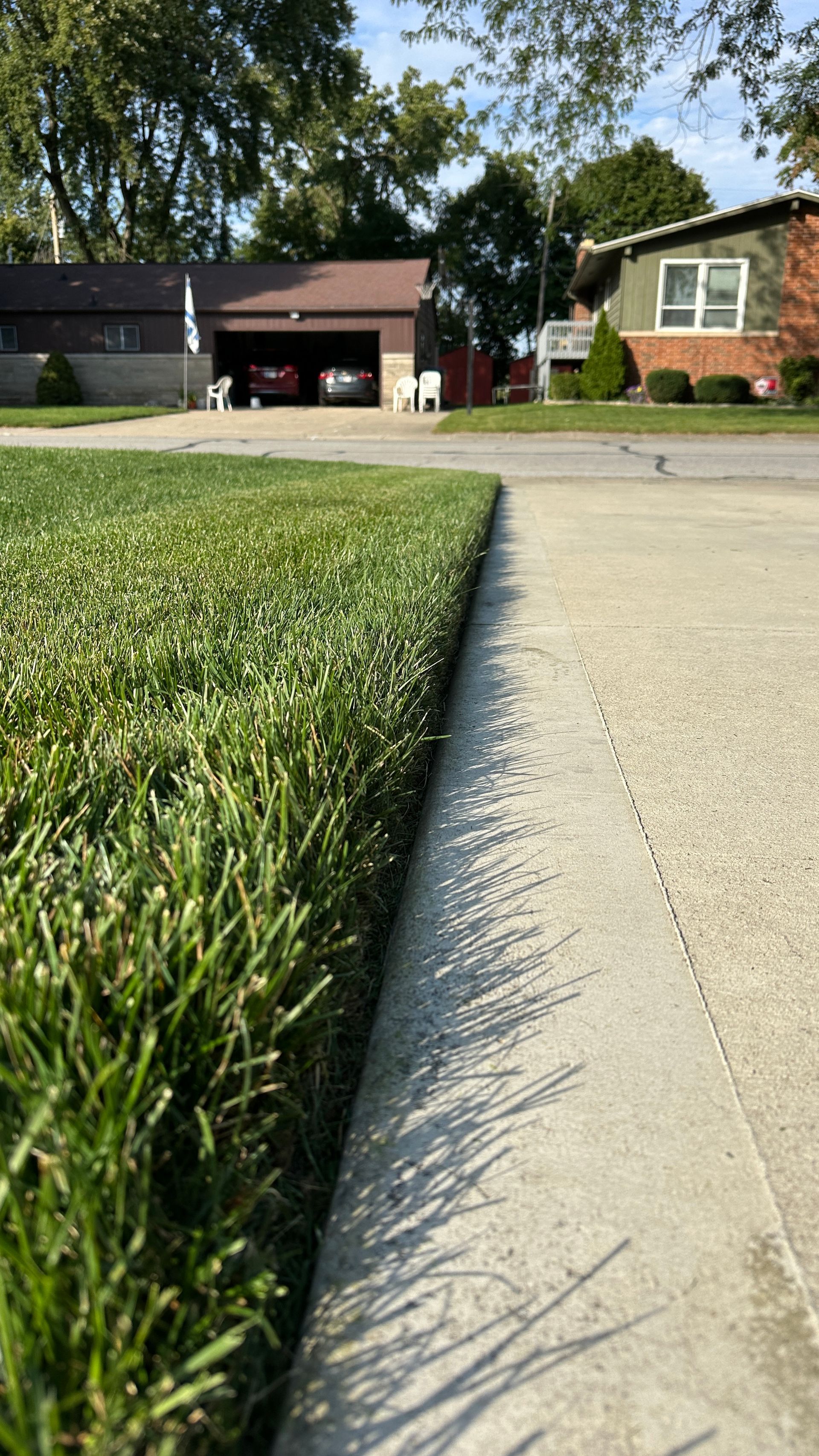
We're a locally owned lawn care business based right here in Warsaw. We know Kosciusko County soil because we work in it every week. We know Indiana freeze-thaw cycles because we plan around them. And we know our customers' names because they're our neighbors.
When you call, a real person answers. When we say we'll be there Friday, we're there Friday. When the invoice arrives, it matches the estimate.
That's how we've built Blades and Stripes Lawn Care — and that's how we treat every lawn we feed.
Ready to feed your lawn the way it actually needs to be fed?
Get a free quote on a fertilization program built for your Warsaw lawn. We'll walk your property, assess soil and turf conditions, and put together a seasonal plan with no high-pressure sales pitch and no surprise charges.